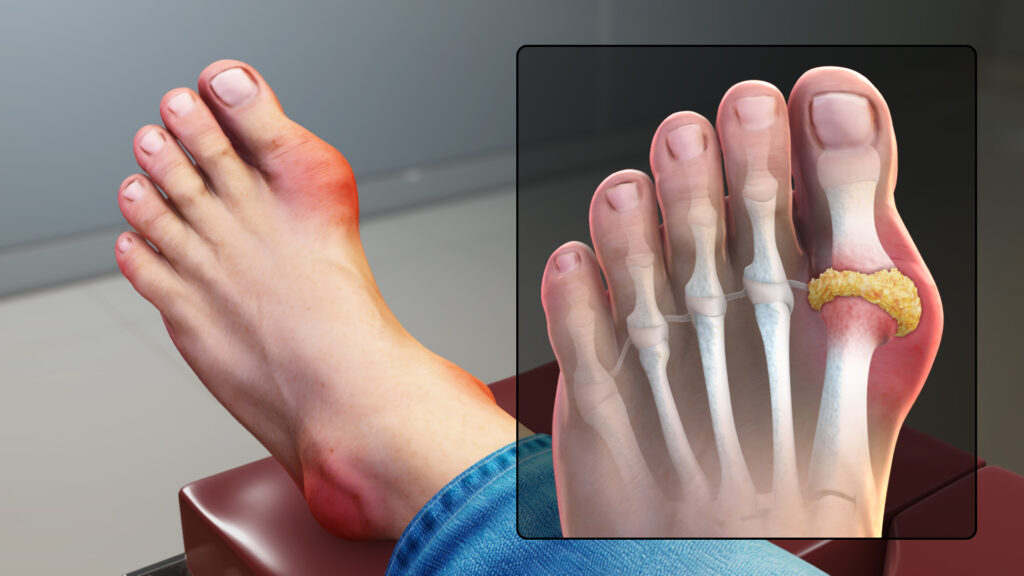
Some natural approaches can support gout care, but they do different jobs. Ice and rest may ease discomfort during an attack. Sustainable lifestyle changes can help with long-term management. Supplements and popular “gout cures” often have much weaker evidence.
None of these should be assumed to replace prescribed treatment. Feeling less pain does not necessarily mean your uric acid has fallen or that the crystals responsible for gout have disappeared.
This guide explains what natural remedies can realistically offer, where the evidence is uncertain and how to evaluate claims before spending money.
Affiliate disclosure: This article contains affiliate links. If you purchase through them, we may earn a commission.
If you are exploring a commercial gout product, you can view the seller’s information here. Compare its claims with the evidence below before deciding whether to purchase.
What Does “Working” Actually Mean?
A remedy might make a painful joint feel more comfortable without changing the underlying gout.
To judge a claim, first ask which outcome it promises:
| Claimed benefit | What would demonstrate it? |
|---|---|
| Less discomfort during an attack | Meaningful improvement in pain and function |
| Lower uric acid | Blood tests showing a sustained reduction |
| Fewer gout attacks | Fewer flares over an appropriate follow-up period |
| Reduced crystal deposits | Clinical assessment or imaging where appropriate |
These outcomes are related, but they are not interchangeable.
For example, a cold pack may help pain without lowering uric acid. Conversely, urate-lowering treatment works over time and is not an immediate painkiller.
Be particularly cautious when a product uses evidence for one outcome to imply that it achieves all four.
Natural Gout Remedies: An Evidence Overview
| Approach | Reasonable conclusion | Main limitation |
|---|---|---|
| Ice, rest and elevation | Can support comfort during a flare | Do not treat the underlying uric acid problem |
| Balanced eating and appropriate weight management | Useful parts of long-term care | May not lower uric acid enough on their own |
| Staying adequately hydrated | Sensible supportive care | Drinking extra water is not a proven rapid cure |
| Cherries or tart cherry products | Some promising findings, but results are uncertain | No established replacement for gout treatment |
| Vitamin C supplements | Not routinely recommended specifically for gout by the 2020 ACR guideline | Benefits in established gout have been insufficient |
| Herbal or “uric acid support” blends | Require assessment of the exact product and evidence | Marketing claims may exceed what research demonstrates |
Ice, Rest and Elevation: Helpful for Comfort
During a flare, resting the affected joint and raising the limb can reduce pressure and improve comfort.
A cold pack wrapped in a towel may also help. Apply it for short periods, up to about 20 minutes at a time, rather than placing ice directly on your skin.
These measures work alongside appropriate flare treatment. They do not reliably stop the inflammation by themselves or remove urate crystals.
If you already have a prescribed plan for attacks, follow it promptly. See our guide to relieving a gout flare for more detail.
Do Cherries or Tart Cherry Juice Work for Gout?
Cherries have attracted attention because some research suggests an association with fewer attacks. However, an association does not prove that cherries caused the improvement.
People who eat cherries may differ in other ways, including their diet, medication use or health habits.
Research findings also vary. A randomized study of tart cherry concentrate in people with gout did not demonstrate a reduction in serum urate over the study period. Larger studies are needed to establish whether particular cherry products meaningfully reduce flares.
The practical conclusion is straightforward:
- You can include whole cherries as part of a varied diet.
- Do not assume juice, capsules and whole fruit have identical effects.
- Check juice and concentrate labels for sugar and serving size.
- Do not replace prescribed medication with cherry products.
There is no established cherry dose that can be recommended as a dependable gout treatment.
Does Vitamin C Lower Uric Acid Enough to Treat Gout?
Vitamin C has been studied for uric acid reduction, but a small change in a blood result does not necessarily produce meaningful control of established gout.
The 2020 American College of Rheumatology guideline conditionally recommends against adding vitamin C supplements specifically for gout.
That does not mean avoiding vitamin C in food. Fruit and vegetables remain useful parts of a balanced diet. It also does not rule out supplementation for a separate nutritional need identified by your clinician.
Avoid assuming that a larger dose will produce better results.
What About Turmeric and Herbal Remedies?
An ingredient described as “anti-inflammatory” is not automatically an effective gout treatment.
Research involving laboratory cells, animals or a different type of arthritis cannot establish that a product prevents gout attacks or dissolves urate crystals.
Turmeric is one example. Research into turmeric and curcumin includes conditions such as osteoarthritis, but those findings should not be presented as proof of benefit for gout. Concentrated supplements also differ from using a spice in cooking.
For a herbal blend, ask whether the exact formulation has been tested in people with gout. Evidence about one ingredient does not validate every product containing it.
“Natural” also does not guarantee safety. Supplements can interact with medicines, and some formulations may cause adverse effects. A pharmacist can review the label in the context of your treatment and kidney function.
Before buying a commercial gout option, check whether its evidence concerns the actual product or only individual ingredients. You can review the seller’s details here, but testimonials alone cannot establish effectiveness.
Can Water “Flush Out” Gout?
Maintaining hydration is sensible, particularly when you might otherwise become dehydrated. However, drinking large amounts of water should not be presented as a way to wash crystals out of a painful joint overnight.
Uric acid handling depends on more than fluid intake. Kidney function, genetics, medicines and other factors also matter.
Drink regularly in a way that suits your health needs. If you have a fluid restriction for kidney or heart disease, follow your care team’s instructions rather than a generic online water target.
For practical beverage choices, see the best drinks for gout.
Lifestyle Changes Have a Role—With Limits
Reducing alcohol and sugary drinks, following a balanced eating pattern and gradually losing excess weight when appropriate can support gout management.
These changes can also benefit health beyond gout. But needing medication after improving your habits does not mean you have failed.
Some people remain above their uric acid target despite consistent lifestyle changes. They may need urate-lowering treatment to address the underlying crystal problem.
Use our guide to lowering uric acid naturally for practical habits, and our gout meal plan for food ideas.
Why a Remedy Can Seem to Work Without Proving It Did
Gout symptoms naturally fluctuate. An attack may start improving after someone begins a remedy, even when the remedy did not cause that improvement.
Other explanations include:
- Prescribed flare medication was taken at the same time.
- The person rested the joint more.
- Several dietary habits changed together.
- The improvement reflected the usual course of the attack.
A personal experience can be worth discussing with your clinician, but it cannot show how reliably the remedy works for other people.
This is why controlled studies matter: they help separate the effect of a treatment from changes that would have happened anyway.
How to Assess a Natural Gout Product
Before paying for a supplement, program or remedy, ask:
- What exactly does it promise? Pain relief, lower uric acid and fewer attacks need different evidence.
- Who was studied? Results in healthy volunteers may not apply to people with established gout.
- Was the actual product tested? Ingredient research does not necessarily support the finished product.
- Was the benefit meaningful? A small laboratory change may not improve symptoms or prevent attacks.
- Does the seller acknowledge limitations? Claims of an immediate or guaranteed permanent cure deserve skepticism.
Also check the full cost, refund terms and whether the seller advises abandoning medical care.
When Home Remedies Are Not Enough
Get medical assessment for a first episode of a hot, swollen, painful joint rather than assuming it is gout.
Seek urgent medical help if joint pain and swelling occur with fever, feeling unwell or worsening symptoms. Joint infection can resemble gout and needs prompt treatment.
Arrange a treatment review if attacks keep returning or your current plan is not controlling symptoms. Do not simply add more supplements or progressively restrict your diet.
Our article on why gout returns after treatment explains what may need reviewing.
Frequently Asked Questions
Can Natural Remedies Cure Gout Permanently?
No natural remedy has been established as a dependable permanent cure. Long-term control involves maintaining uric acid at an appropriate level, often with medication alongside lifestyle measures.
Can I Use Home Care Alongside Medication?
Measures such as resting the joint and using a wrapped cold pack can complement treatment. Supplements need separate consideration because they may interact with medicines.
How Can I Tell Whether My Uric Acid Is Improving?
Blood testing is needed to assess uric acid. Less pain alone cannot confirm that the level has reached your treatment target.
Should I Stop Allopurinol While Trying a Natural Remedy?
Do not stop prescribed urate-lowering medication on your own. Discuss any proposed changes with your clinician, including concerns about side effects or whether treatment is working.
If you choose to explore a commercial offer, read the seller’s product information here. Use the evidence questions above to assess it and keep prescribed care in place.
Sources and Further Reading
- American College of Rheumatology: Gout
- 2020 American College of Rheumatology Guideline for the Management of Gout
- NHS: Gout
- Randomized study: Tart cherry concentrate and serum urate in people with gout
- NCCIH: Turmeric—usefulness and safety
- NCCIH: Using dietary supplements wisely
Medical disclaimer: This article provides general education and does not replace diagnosis or individualized medical advice. Consult your healthcare professional before starting supplements or changing prescribed treatment.